

.svg)


.jpg)
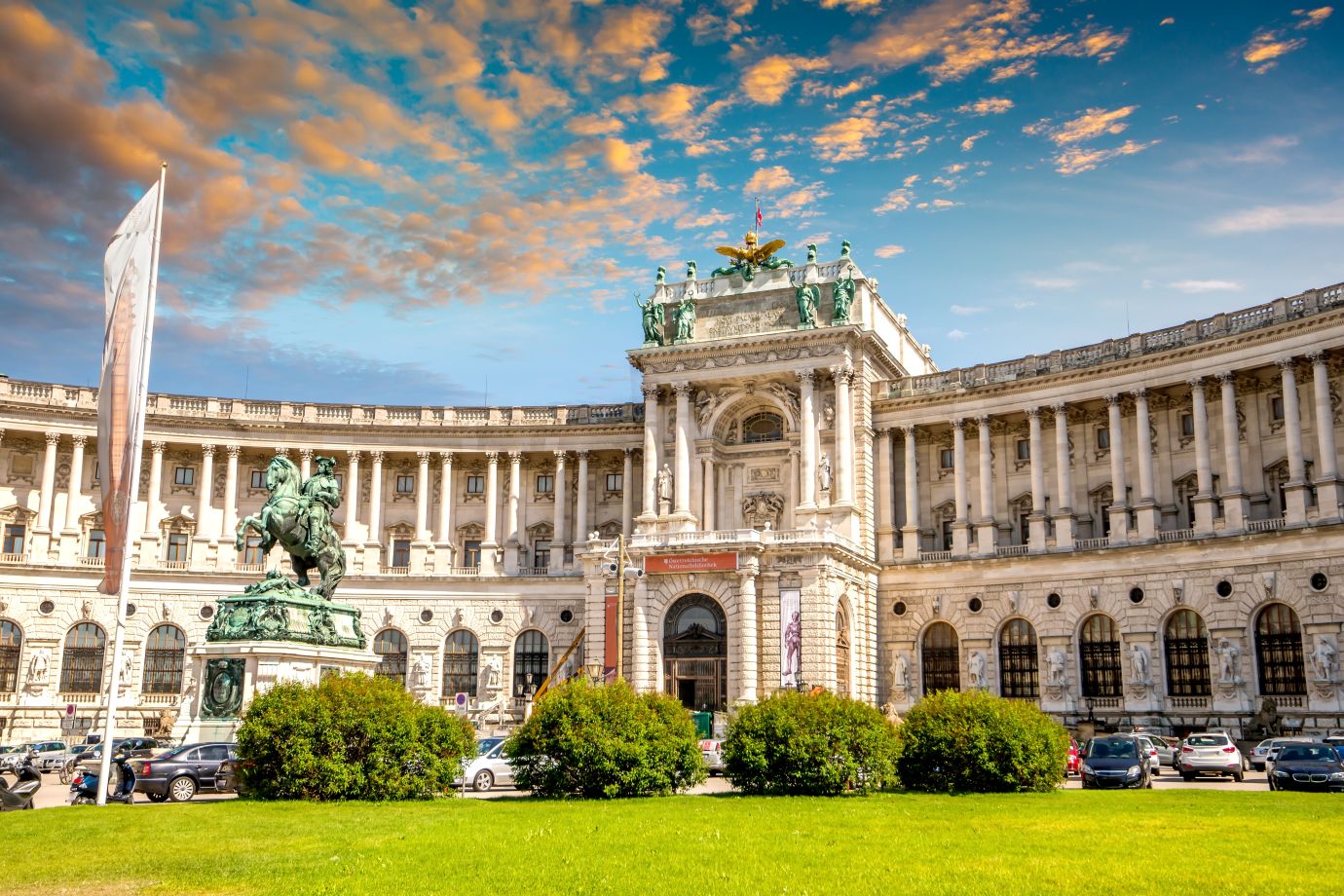
There is a particular quality to the light in Vienna in the late afternoon, when it catches the gilded rooflines of the Ringstrasse and turns the Danube a dull, forgiving silver. It is a city that has spent two centuries perfecting the art of looking effortless, and it shows. The coffee arrives on a silver tray with a glass of water you did not ask for. The trams glide rather than rattle. Even the queue at the Sacher is orderly. And yet, for all its poise, Vienna is not a museum. Beneath the Habsburg pomp there is a restless, creative, faintly subversive city that has been quietly reinventing itself since the fall of the empire, and it rewards those who look past the horse-drawn fiacres.
Getting there and getting around
Vienna International Airport sits 18 kilometres south-east of the centre, at Schwechat, and the run into town is one of the more civilised airport transfers in Europe. The City Airport Train takes 16 minutes to Wien Mitte, but if you are arriving with luggage, children, or a suitcase of duty-free Grüner Veltliner, a pre-booked car is the sensible option. Airport Executive's Vienna chauffeurs meet you in the arrivals hall with a name board, take the bags, and have you in the First District in around 25 minutes, with none of the indignity of hauling cases through the U-Bahn on a Friday evening. Book the same way for the return, and the car is waiting at the hotel door when it is time to leave.
Once you are there, walk. The Innere Stadt is compact enough to cross in twenty minutes, and the outer districts are stitched together by a tram network that is one of the great pleasures of the city. Line 1 and Line 2 loop the Ring in opposite directions past the Opera, the Parliament, the Rathaus and the Burgtheater, and a single ticket costs less than a coffee. Do not bother with a car in the city. You will spend more time looking for parking than seeing anything.
Where to stay
The grand old names still hold. The Hotel Sacher, opposite the Opera, remains the address for those who want damask wallpaper, a concierge who has seen everything and a slice of the eponymous torte that is, whatever the sceptics say, still very good. The Imperial, a few streets along the Ring, is grander still, all marble staircases and a sense that a Habsburg archduke might descend at any moment.
For something with a lighter touch, the Rosewood Vienna on Petersplatz has transformed a former bank headquarters into something quietly luxurious, with a rooftop bar that looks directly onto the dome of the Peterskirche. Hotel Motto, in the Sixth District near the Naschmarkt, has a Parisian bohemian feel and a brasserie on the ground floor that is a destination in its own right. And if you would rather stay somewhere that feels like Vienna in 2026 rather than 1896, the Hoxton, in the Third, has taken a former chamber of commerce building and filled it with the kind of terrazzo-and-velvet interiors that make you want to linger in the lobby all morning.
What to see
Start with the Kunsthistorisches Museum, if only for the Bruegels. The museum holds the largest collection of his work anywhere in the world, and standing in front of Hunters in the Snow, with its grey January sky and skaters on the pond, is one of the great art experiences in Europe. Go early on a weekday. The café under the cupola, all marble columns and Klimt murals, is worth a stop regardless of your feelings about Flemish landscape painting.
The Belvedere is where you will find Klimt's The Kiss, along with a crowd of people photographing it, and it is fair to say that the palace gardens are as much the point as the painting. The Leopold Museum in the MuseumsQuartier holds the world's largest Schiele collection and is a good deal quieter. The MuseumsQuartier itself, a converted imperial stables, is where Vienna's younger residents spend summer evenings sprawled across the oddly shaped plastic furniture in the courtyard.
Skip the Hofburg tour unless you are genuinely interested in Empress Sisi's exercise regime. Instead, walk through the palace complex to the Spanish Riding School, where the Lipizzaner stallions perform to Mozart under crystal chandeliers, and then on to the Nationalbibliothek's Prunksaal, a baroque hall of books that looks like something Borges dreamed up.
Further out, Schönbrunn is unavoidable, and rightly so, though the gardens and the view from the Gloriette are more rewarding than the interior. Take the tram to the Zentralfriedhof, the vast central cemetery where Beethoven, Brahms, Schubert and Strauss lie within a few metres of one another. It is peaceful, slightly melancholy and very Viennese.
Where to eat and drink
The coffee house is the beating heart of the city, and there are rules. You order a Melange, not a cappuccino. You are entitled to sit for as long as you like with a single cup. Café Central, with its vaulted ceilings and history of Trotsky and Freud, is the famous one and the queue reflects that. Café Sperl in the Sixth is more atmospheric and less crowded, with billiard tables and newspapers on wooden holders. Café Prückel, on the Ring, is a fifties time capsule with the best Apfelstrudel in town, and Café Hawelka, near Stephansplatz, is dim, smoky in spirit if no longer in fact, and serves warm Buchteln after ten at night.
For dinner, the Beisl, Vienna's answer to the bistro, is where the city actually eats. Gasthaus Pöschl, tucked behind the Franciscan church, does an exemplary Wiener Schnitzel and a Tafelspitz that will explain why the emperor ate it every day. Zum Schwarzen Kameel, a delicatessen since 1618, is where the well-dressed First District stands at the bar with a glass of Veltliner and an open sandwich at lunchtime. Steirereck, in the Stadtpark, holds two Michelin stars and remains the serious fine-dining address, with a menu that reads like a botanical survey of Austria. Book weeks ahead.
The Naschmarkt is the city's great open-air food market, a kilometre-long strip of Turkish, Viennese and Levantine stalls, and the Saturday flea market at its western end is a genuine treasure hunt. Eat at Neni, for Israeli-Mediterranean plates, or grab a Käsekrainer sausage from one of the Würstelstände that dot the city and are, without irony, one of Vienna's proudest culinary institutions.
The Vienna nobody tells you about
Head across the Danube canal to the Second District, Leopoldstadt, once the Jewish quarter, now home to the Prater, the Augarten and some of the best small restaurants in town. The Karmelitermarkt on a Saturday morning is the anti-Naschmarkt, local and unhurried. Take the Riesenrad, the 1897 Ferris wheel of Third Man fame, at dusk, then walk into the Prater woods, which stretch for miles and feel a world away from the Ring.
And go to the Heuriger. These wine taverns in the vineyards on the northern edge of the city, in Grinzing and Nussdorf and Stammersdorf, serve the year's new wine with cold platters of cheese, ham and spreads, at long tables under chestnut trees. Take the tram to Nussdorf and walk up into the vines. Vienna is the only capital city in the world with serious vineyards inside its boundaries, and an evening spent among them, with the lights of the city below, is the best argument there is for coming back.
When to go
Spring and early autumn are the sweet spots. May brings the chestnut blossom on the Ring; September and October bring the new wine and the golden light. December, with the Christmas markets on Rathausplatz and in front of Schönbrunn, is crowded but undeniably magical. July and August can be hot and airless, and half the city decamps to the lakes.
Arrive the Viennese way
Vienna is a city built on the idea that things should be done properly, and the journey there deserves the same treatment. Airport Executive has a chauffeur waiting at Schwechat when you land, with the Ring and your hotel a short, quiet drive away, and the same standard of car and driver on the way back. Fixed prices, flight tracking, no waiting at the rank, and no surprises on the bill. Book your Vienna transfers at airportexecutive.com, or speak to the team about a car for the Heuriger, Schönbrunn or a day trip to the Wachau while you are there.
Book your Vienna airport transfer here or call our reservations team on +44 (0)208 838 3333.
Airport Executive, a better way to travel.