

.svg)


.jpg)
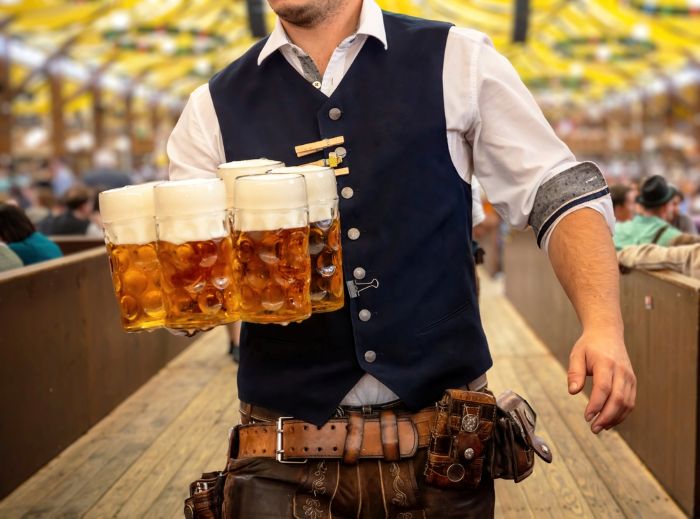
Most people think they know what Oktoberfest is. They picture enormous beer halls, lederhosen, and a slightly chaotic atmosphere that lasts until late. All of that is accurate. What most people miss is that Oktoberfest is also one of the most sophisticated hospitality events in the world, with private dining boxes booked years in advance, boutique hotels commanding some of the highest room rates in Europe, and a city that transforms beautifully for six weeks every autumn.
In 2026, Oktoberfest runs from Saturday 19 September to Sunday 4 October at the Theresienwiese in central Munich. If you are planning to attend, this guide will help you do it properly.
What Is Oktoberfest, Really?
The festival began in 1810 as a celebration of the marriage of Crown Prince Ludwig of Bavaria. It has been held almost every year since, making it one of the longest-running public festivals in the world. The modern incarnation spans 16 days, attracts around six million visitors, and is served by six major brewing houses, all of them Bavarian, all of them operating enormous marquee tents with capacities ranging from 3,000 to over 10,000 people.
Despite the name, most of Oktoberfest happens in September. The dates were moved earlier in the 19th century to take advantage of longer, warmer evenings. Only the final four days fall in October.
The opening ceremony on 19 September sets the tone for everything that follows. The Mayor of Munich taps the first keg in the Schottenhamel tent at noon and declares O'zapft is! (It is tapped). Beer service begins across the entire site simultaneously. It is theatre on a grand scale.
The Luxury Angle Most People Miss
Oktoberfest has a VIP dimension that operates almost invisibly to the general public. Each of the major tents contains private reserved sections, some with dedicated table service, enclosed seating, and menus that go considerably beyond the standard pretzels and roast chicken.
The most sought-after reservation in the entire festival is a table at Käfer Wiesn-Schänke, the Käfer tent. This is where Munich's business elite, international celebrities, and a significant portion of European corporate hospitality congregates. The food is genuinely excellent. A table here is not booked on the day. It is secured months in advance, often via personal connection or a concierge with the right contacts. If you are serious about attending, this should be your first call.
The Kuffler tents, including the Spaten-Festhalle, offer a similarly elevated experience, with private boxes available for groups and a noticeably different atmosphere from the main public areas.
For corporate groups and delegations, Oktoberfest hospitality packages are available through specialist operators who secure reserved tables, arrange food and drink service, and can organise transfers and accommodation as part of a single package.
Getting There
Munich Airport (MUC) is one of Europe's best-connected hubs, with direct connections from North America, the Middle East, Asia, Africa, and across Europe. It handles over 40 million passengers annually and is consistently rated among the continent's finest airports to travel through.
From the airport to the Theresienwiese takes approximately 45 minutes by car. The S-Bahn train takes a similar time but requires navigation and luggage handling that most festival visitors would rather avoid.
An Airport Executive private transfer delivers you to your hotel door from arrivals, with your driver waiting as you clear customs. During Oktoberfest, when demand for taxis and rideshares spikes significantly and wait times extend, a pre-booked transfer is not a luxury. It is the sensible choice.
Book your Munich airport transfer here

Where to Stay
Munich's hotel market during Oktoberfest is unlike almost any other event in Europe. Rooms that cost 150 euros in August cost 600 in September. Book as early as possible, and book centrally.
Bayerischer Hof on Promenadeplatz is Munich's grandest hotel, a five-star institution with one of the best rooftop bars in the city. It has been the address of choice for heads of state, royalty, and senior business figures for over 180 years. During Oktoberfest it is in exceptional demand.
Mandarin Oriental Munich on Neuturmstrasse is smaller, quieter, and arguably finer. The rooftop pool is one of the city's most enjoyable secrets. For guests who prefer discretion over grandeur, this is the correct choice.
The Charles Hotel on Sophienstrasse is the contemporary option, a Rocco Forte property with understated interiors, an excellent spa, and a location that puts you within easy walking distance of the old town and the festival site.
For those who prefer private accommodation, Munich has a growing supply of premium serviced apartments and private residences available for Oktoberfest week. For groups of four or more, this is often the most comfortable and cost-effective arrangement.
What to Wear
Oktoberfest has a dress code, though it is an informal one. Traditional Bavarian dress is not compulsory, but wearing it considerably improves the experience. You will be treated differently in the tents, and you will feel considerably more part of the occasion than visitors in jeans and trainers.
For men, Lederhosen (leather breeches) with a checked shirt is the standard. For women, the Dirndl, a traditional Bavarian dress, is almost universally worn. Both can be bought or hired in Munich, though buying in advance from a specialist retailer produces better results. Expect to spend 150 to 400 euros for something that will last and look correct.
When to Go
The opening weekend (19 to 21 September) is the busiest, loudest, and most chaotic. It is also the most atmospheric if you enjoy being at the centre of things.
Weekdays in the second and third week tend to offer a more manageable experience, with shorter queues, slightly better availability at the tents, and an atmosphere that is still excellent without the peak weekend pressure.
The final weekend (3 to 4 October) has its own energy and is worth considering if opening weekend dates do not suit.
Avoid going between noon and 3pm on any Saturday if possible. This is when every tent fills simultaneously and the queues outside become serious.
Beyond the Tents
Munich in September rewards those who leave time for the city itself. The Englischer Garten, one of the largest urban parks in the world, is genuinely beautiful in early autumn. The Deutsches Museum on the Isar island is the world's largest science and technology museum and entirely worth a morning. The Marienplatz and the old town repay exploration at any time of year.
For dining beyond the festival, Munich has a strong restaurant scene. Tantris, the legendary French restaurant in Schwabing, holds two Michelin stars and is among the finest tables in Germany. Pageou in the Altstadt is the contemporary choice, showcasing Bavarian ingredients with modern technique. Brenner Operngrill on Maximilianstrasse offers an excellent all-day menu in a beautiful former opera house and is ideal for a relaxed dinner after an afternoon at the festival.
Arrive Ready for It
Oktoberfest is one of those events that requires planning to enjoy properly. The tent tables, the hotels, the transfers, and the dress, all of it benefits from being arranged well in advance. The experience for those who plan is substantially better than the experience for those who improvise.
Airport Executive provides private transfers to and from Munich Airport throughout the Oktoberfest period. Fixed fares, no surge pricing, and a driver waiting as you arrive. Whether you are travelling from Tokyo, Dubai, New York, or Johannesburg, we coordinate the Munich end of your journey.
Airport Executive, a better way to travel.